A stubborn muscle knot needs more than temporary relief.
Dry needling in Amsterdam
Do you have a stubborn knot in a muscle that keeps coming back? With dry needling we address trigger points directly at the source. At BeyondPhysio in Amsterdam West, we combine this technique with our cause-focused approach, so you do not only feel temporary relief but actually move forward.
★★★★★ 47 reviews · No referral needed · often covered by insurance
Who is this for?
This page is for you if you have a tight muscle, trigger point, referred pain or movement restriction that keeps returning.
During your first appointment we assess whether dry needling suits your complaint. We only use it when it makes sense within a broader treatment and exercise plan.
What can dry needling help with?
What you notice
- Neck and shoulder complaints.
- Tension headaches that come from the neck.
- Low back pain.
- Sports injuries and overloaded muscles.
- Tennis elbow and other tendon complaints.
- Movement restrictions caused by a tight muscle.
Dry needling is a treatment technique where your physiotherapist places a thin, sterile needle into a tight point in the muscle, known as a trigger point. That point can cause local pain, but it can also refer pain to areas such as your head, arm or back.
Dry needling or acupuncture?
Dry needling and acupuncture both use needles, but that is where the comparison ends. Acupuncture comes from traditional Chinese medicine and works with energy pathways.
Dry needling is based on modern Western knowledge of muscles, nerves and anatomy. The needle is dry, meaning no fluid is injected. The goal is the mechanical effect on the muscle and nervous system.
Why dry needling alone is not enough
Dry needling can make a muscle feel looser quickly, but if the same load, posture or weak link remains, the muscle often tightens again.
That is why dry needling is a tool, not the goal. We combine it with manual therapy, targeted exercises and strength building to understand why that muscle keeps tightening.
How we treat this at BeyondPhysio
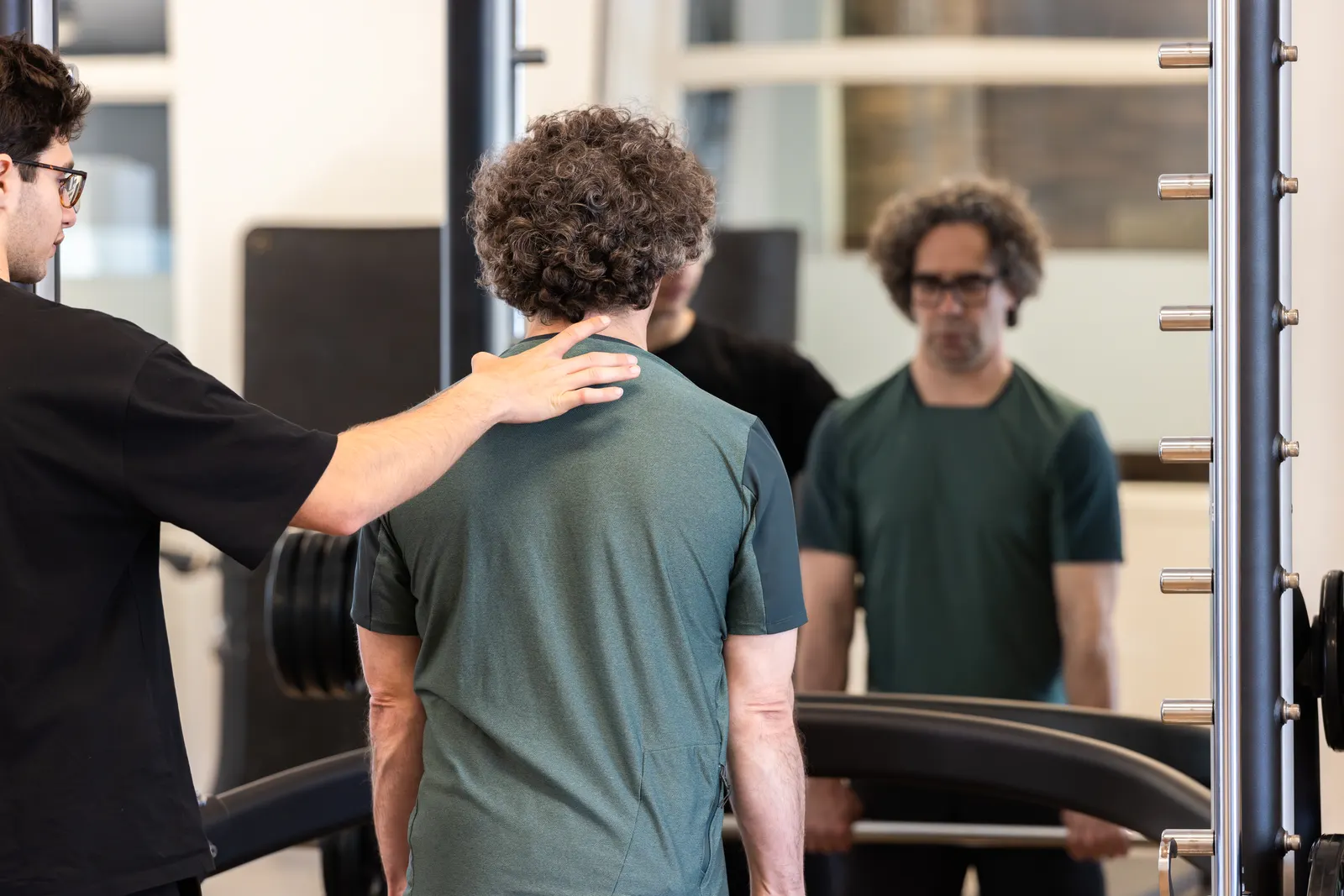
Where many practices move you in and out within 20 minutes, we take 45 to 60 minutes per session. This gives us time to combine dry needling with assessment, treatment and exercise therapy, and to build strength afterwards in the BeyondFit training facilities.
Dry needling can be part of our approach to neck pain, shoulder pain and sports physiotherapy.
Assess whether dry needling fits.
We assess your complaint, movement restriction and trigger points, and only choose dry needling when it is logical within your recovery plan.
Treat trigger points precisely.
The physiotherapist places a thin, sterile needle into the tight point. You may briefly feel a cramping response, after which the muscle usually feels looser.
Address the cause actively.
After treatment we build mobility, strength and control so the same muscle is less likely to tighten again.
What you can do yourself
After treatment you may feel muscle soreness for a day, similar to the feeling after a firm training session. This is normal and settles by itself.
Gentle movement is fine, but avoid heavy training directly after the treatment. Your physiotherapist will give you personal advice.
What you get back
Your muscle feels looser and moves more freely. More importantly, you understand why the complaint appears and work on the capacity needed to prevent it from returning.
What waiting costs you
If you only release the tight muscle without training the cause, dry needling remains a temporary reset. The complaint can then keep returning as soon as you ask the same load from your body.
Frequently asked questions
Is dry needling painful?
You barely feel the needle itself. What you may feel is a short cramp when we reach the trigger point. It lasts only a moment and most people find it manageable.
How many treatments do I need?
This differs per person and per complaint. Some people notice a difference after one session, while others need several treatments. During your first appointment we give you a realistic estimate.
Do I need a referral from my GP?
No. You can book an appointment directly without a referral.
Can I exercise after dry needling?
Gentle movement is fine, but avoid heavy training directly after the treatment. Your physiotherapist will give you personal advice.
Book your assessment
Dry needling is part of a regular physiotherapy treatment with us. If you have supplementary Dutch health insurance that covers physiotherapy, treatment is usually partly or fully reimbursed. A GP referral is not needed.
Want to know whether dry needling fits your complaint? Book your assessment and get treatment that looks beyond the muscle knot.